America's stock car racing is to international racing as the Big 3 (Ford, GM, Chrysler) are to the international automaker industry -- both are the laughing stock (no pun intended).
NASCAR has become such a joke that something like Godwin's Law has developed: The longer a conversation continues among international racing enthusiasts, the more likely someone will make a joke about NASCAR or their misnamed Car of Tomorrow.
Foreign manufacturers see racing as a means to innovate. For automakers outside the U.S., fierce competition on the track leads to better products on the street. Companies like Honda and Toyota develop new technology for their race teams, then find ways to make it affordable for every day cars. American manufacturers, however, refuse to compete on the world stage -- both on the race track and on the street.
Almost all international touring car series require starting with a stock monocoque -- the entire car body (frame, shell, the whole shebang) -- straight off the factory floor. NASCAR starts by welding up a tubular frame (prefab from a single supplier). Then they add a thin shell of sheet metal. The trunk does not open. Headlights and taillights are stickers. NASCAR is less like a stock car racing league and more like a mock-up racing league.
Like the bloated American car companies and the fat cats that run them, NASCAR made their new Car of Tomorrow bigger and boxier, not sleeker and slimmer. International racing rewards those who build smaller, lighter, more efficient engines that squeeze more horsepower out of smaller and lighter engine blocks. The engine block and cylinder heads of NASCAR's Car of Tomorrow, on the other hand, is based on a V8 engine from the 1960s.
Instead of taking advantage of cutting edge technology, American automakers and NASCAR tap into obsolete technology that even car consumers aren't buying anymore. Even the American government has modernized more than NASCAR. It has been illegal to sell a new car that runs on a carburetor in America since the mid-1980s, but the Car of Tomorrow continued NASCAR's tradition of using carburetors.
The Car of Tomorrow also replaced the rear spoiler (on the body) with a rear wing (above the body) and replaced the front valance (aluminum curtain under the front bumper) with a front splitter. NASCAR borrowed these new design elements from international touring car racing series (e.g., DTM, BTCC) who have been using this type of rear wing and front splitter combination since the mid 1980s.
NASCAR's spoiler-splitter change came at a time when aftermarket rear wings had become very popular on street cars (think Fast and Furious). This was meant to reduce the benefits of 'drafting' while providing the additional benefit of appealing (or so they hoped) to the young, hip import performance crowd (again, think Fast and Furious). Unfortunately, the NASCAR design has made the cars notoriously more difficult to maneuver, especially when passing. The cars are also more difficult to setup (prepare for each race tracks), and drivers most commonly describe the handling as 'twitchy.'
Like the Big 3 car companies, the Car of Tomorrow is a mirage, a diaphanous image that is easily seen through when held up to the light. The Big 3 tells taxpayers they are developing the cars of tomorrow -- NASCAR claims they are racing them. The sad reality is that America's automakers are recycling yesterday's technology and sponsoring the racecars of yesterday. NASCAR touts cost savings as a primary factor in its regulatory decisions, but team owner Robert Yates says that fuel injection would be cheaper. He summed it up,
If I had to close down my engine shop and lay off all of my guys, they wouldn't be able to get a job at a car dealership because they've been working on antique engines.
NASCAR engine builder Danny Lawrence (of Richard Childress Racing) says,
They still want it to be where the guys in the shop don't have to have a lot of engineers or computer guys.
Like NASCAR, the Big 3 automakers squandered billions of dollars in profits over fifty years rather than investing in research and development that would have ensured their future. If IBM had decided in its glory days not to try to make personal computers smaller and more efficient, we would not be debating an IBM bailout.
While NASCAR is touting a Car of Tomorrow that is less aerodynamic and less efficient, the rest of the world has moved on. Technical development is the crux of international racing. Although international racing leagues take on some aspects of spec racing, they largely establish regulations by spelling out desired outcomes. This encourages innovation because each team wants to develop a faster, more efficient, more powerful way to meet any outcome set by the sanctioning bodies.
Every year, Formula 1 enacts regulations to slow down the cars for safety reasons. But where there's a will, an engineer will find a way. At the end of every year, Formula 1 cars are faster and more efficient than the year before. NASCAR's Car of Tomorrow included some similar features. Crews have gotten better at setup, and drivers have learned to better handle the car, but there has been no innovation by the engineers.
The car bosses of yesterday have tried for decades to lay the blame of their failures at the feet of the United Auto Workers (UAW) union, but the unions don't design or market the cars. Unions do not allocate investment in research and development. The employees of automobile manufacturers do the same thing all American employees do. They negotiate the best compensation package they can, and then they sweat and toil every day to earn their wages. The buck stops in the corner office on the top floor -- not on the factory floor.
UAW workers have sacrificed much of their hard-earned salaries and benefits to help save these failing giants (and have already voiced willingness to make more sacrifices). After all, taking a pay cut is better than taking no pay at all. But while workers on the line have been cutting back on food, healthcare, and education for their families, the executives continued jetting around on fat bonuses and multi-million dollar salaries.
It never occurred to the Detroit 3 executives that they might sacrifice a little today for a better tomorrow until they shuffled into the capitol building two weeks ago, stepping off their corporate jets with hats in hand, asking for a handout and instead were treated to a dressing down. Their capitol cronies will surely give them their payola -- but they will join the bailout beneficiaries club only after suitable hazing. After all, what member of Congress would miss an opportunity to bolster their standing back home by publicly humiliating Detroit's finest tycoons.
When the Big 3 CEOs truckled into the beltway in ostensibly ultramodern hybrid vehicles, they paraded more of their cars of yesterday. Ford CEO Alan Mulally drove a Ford Escape Hybrid, and GM CEO Rick Wagoner drove a Chevrolet Malibu Hybrid. Both cars have a MPG (mile per gallon) rating roughly equal to the gas-drivenHonda Accord. The Ford Escape Hybrid cannot run on electric-only power above 25 mph. The Chevrolet Malibu Hybrid cannot run on electric-only power at all. Toyota and Honda have edged out the Big 3 automakers -- both in gas-driven and hybrid cars.
The $1 salaries the Big 3 CEOs are purporting are also part of the illusion. Ford CEO Alan Mulally madea public showing of accepting only a $1 salary in 2006, but he actually earned $7.9 million that year in other compensation. The CEOs of companies like Google and Apple have gotten rich on $1 salaries. This is not their first rodeo bailout.
The so-called 'Detroit problem' is not going to change without changing the executive culture of Detroit. Just like NASCAR, the Big 3 are going to go round and round in 500 circles before finally realizing the answer is to turn in the other direction.
(Via The Huffington Post | Raw Feed.)




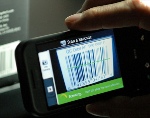 With the rise of app-laden smartphones like the iPhone and Google's Android OS, now on T-Mobile's G1, many penny-pinching shoppers have downloaded barcode scanning applications onto their mobile devices. These apps allow consumers to compare the prices of merchandise on a store's shelf to competing stores in the area just by taking pictures with their smartphone's camera. The prices are instantly retrieved and displayed on the mobile phone so consumers can know before they buy if they're getting a good deal.
  Although this is just anecdotal evidence from one customer, it's entirely believable that without concrete store policies in place, you're going to encounter rogue employees here and there who have no idea what you're doing and will ask you to stop.