Cory Doctorow:
Hallelujah! Apple and EMI just announced that they will be selling DRM-free Apple songs through the iTunes Music Store. The songs will cost 130 percent of the price of the existing crippled songs, and you'll get to choose. Weirdly, Apple seems to have sold this move to EMI by saying that the DRM-free version will be a "premium" offering for audiophiles who want higher-quality music. I think that audiophiles are probably the people who have the least trouble keeping up with the latest tips for efficiently ripping the DRM off of their music -- the people who really need DRM-free music are the punters who can't even spell DRM.
This is some of the best news I've heard all year. DefectiveByDesign is soliciting ideas for a thank-you gift to Steve Jobs. This may just be a sneaky way of hiking music prices, but hell, it's a whole lot more than I thought we'd get. What's more, Apple pricing DRM-free music at $1.29 means that the $0.79-0.99 DRM-free MP3s from competing indie music stores will get a huge price advantage.
I could not be happier right now. I really hope Apple decides to make a web-based version of the iTunes store so that I can buy iTunes tracks in the future using Ubuntu Linux (I know, it's been ages and I still haven't written my "switching to Linux" article, it's in the pipe, but here's the story: I switched, it's awesome, I love it).
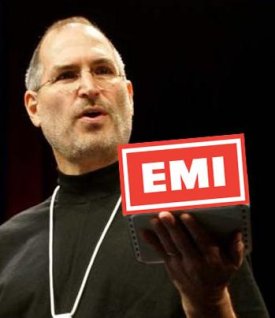
Jobs, who stressed the need for higher-quality music with the rise of high-fidelity home speaker systems, called EMI's move "the next big step forward in the digital-music revolution--the movement to completely interoperable DRM-free music." He added that "Apple will reach out to all the major and independent labels to give them the same opportunity" and suggested that half of iTunes' music tracks will be available in both DRM-loaded and DRM-free form by the end of 2007.
"EMI is pioneering something that I think is going to become very popular," Jobs said when asked if other music labels would likely add DRM-free music to their iTunes catalog.
"What we're adding is a choice--a new choice--and people can choose whichever one they want," Jobs said regarding Apple's decision to make available two levels of sound quality and DRM restriction. Nicoli cited internal EMI tests in which higher-quality, DRM-free songs outsold its lower-quality, copy-protected counterparts 10 to 1.
Link
Update: Damien sez, "It gets better! You can upgrade existing DRMed 128kbit tracks to the new DRM-free
256kbit ones for the price difference - i.e. $0.30/€0.30/£0.20 (no
sneaky tactic to make you buy the whole track again) DRM is being removed from the music videos with no price change. Albums will be DRM-free 256kbit as default at current DRMed prices
according to EMI's press release."
(Image ganked from Engadget)
Update 2: Engadget's Ryan Block has a great, skeptical editorial about this announcement, "Apple and EMI ditching DRM is good, but it's not good enough"
But we don't believe having free, usable, uncrippled media is a feature -- it's a right. You don't pay a premium for higher quality DRM-free physical media -- DVD Audio and SACD discs costs the same as CDs (in fact, often times they come as hybrids on the same media). Asking customers to pay 30% more for no DRM and a higher bitrate is a distraction, a parlor trick to take our attention away from the philosophical issue: EMI is still selling DRMed music. EMI CEO Eric Nicoli said, "Not everybody cares about interoperability or sound quality." Since when did the two become so intrinsically linked? Sure, not everyone cares to vote either, that doesn't mean it's a premium privilege. Nicoli also stated EMI has taken the view that it must "trust consumers." It's true, today's announcement shows more trust than they ever displayed before -- but it's still conditional trust.
See also:
Steve Jobs blogs about DRMWill Steve Jobs drop iTunes DRM in a heartbeat?What Steve Jobs's DRM announcement meansOpen letter to Steve Jobs: put your DRM where your mouth isMacrovision sends pretty lies to Steve JobsApple drops Trusted ComputingEMI changes tune on DRM-free music
EMI releases Brazilian DRM CDs that totally hose their customers
EMI abandons CD DRM
EMI wants millions and your IP address in revenge for Beachles
EMI threatens cricket fans over parody songs
US Justice Dept to Europe: Apple's DRM is off-limits
Norwegian ombudsman says Apple's iTunes DRM is illegal
Euro-RIAA justifies breaking iTunes, endorses fairy-tale of "open DRM"
Why Apple is to blame for iTunes DRM
Apple's hypocritical slam against French DRM-interop law
French DRM law gets ugly - protest May 7/2PM Place de la Bastille
Apple sued for iTunes/iPod monopoly tying
Apple and Sony sued for non-interoperable DRM
Germany and France challenge iTunes DRM
France will let MSFT play iTunes - but what about open source players?
Former Apple exec: No more DRM for me, ever
Hillary "RIAA" Rosen: iPod DRM is cruel and unfriendly!
Ballmer: iPod users are thieves
Friday: call RIAA execs and tell them "No DRM!"
Right-wing think-tank hates DRM
Music labels: DRM makes you into iTunes' love-slave
Sony: DRM cost us the Walkman
Apple's new DRM reneges on your purchase conditions, picks your pocket
Freely copy iTunes Music Store files
Real ships guerrilla DRM for the iPod
New iPod firmware shuts out Real
Anti-iTunes DRM demonstrations across the USA tomorrow
Apple steals iTunes customers' paid-for rights to stream
iPhone - the roach motel business model
DRM company vows to hack iTunes DRM
DVD Jon selling Apple DRM to Apple's competitors
Jon Lech Johansen's PyMusique re-opens iTunes Store access
How Apple's DRM works
Details on cracking Apple's iTunes DRM
Apple selling DRM'ed silence at $0.99 a pop
Silent iTunes song stripped of DRM and given away
Sony rootkit ripped off anti-DRM code to break into iTunes
Protect your investment: buy open
(Via Boing Boing.)